
Vietnam’s pet economy is moving from a small niche into a serious consumer category. A recent Chinese industry article, “Vietnam’s pet economy is exploding”, makes one point very clearly: the market is no longer only about cheap pet products. It is entering the stage where commercial pet food, functional products, online content, and private label supply chains start to work together.
From my perspective, this is exactly the stage where pet food and pet supplement OEM suppliers should pay attention. Vietnam is not yet as mature as China, Europe, or the United States, but that gap is also the opportunity.
The Data Shows a Market in Transition
The article cites several data points worth watching. Mordor Intelligence is cited as estimating Vietnam’s pet food market at about $156 million in 2025 and $168 million in 2026, with a 7.61% compound annual growth rate. Verified Market Research is cited with a more optimistic view, expecting the market to reach about $274 million by 2032, with a 9.5% CAGR.
Pet food is only one part of the market. The article also states that Vietnam’s broader pet economy, including pet products and medical services, is around $500 million. It cites Pet Fair SEA industry data saying Vietnam has more than 12 million cats and dogs, and that 65% of households have at least one pet. Cats account for about 40% and dogs about 35%, with cat ownership growing faster, partly because cats fit urban apartment life more easily.
The most important number for suppliers is not the total market size. It is commercial pet food penetration. The article says only about 30% of Vietnam pet owners currently buy commercial pet food, compared with more than 60% in China and more than 90% in Europe and the United States. That gap explains why Vietnam is attractive for pet food, treats, and supplement brands.
This also connects with a broader point I discussed in Global Pet Market Ranking: Where Pet Product Exporters Should Look Next: market size is only the first filter. Exporters still need to understand market stage, channel structure, product fit, and buyer education.
Commercial Pet Food Is Still the First Positioning Battle
When a market moves from home leftovers to commercial pet food, the first winners are not always the most premium brands. Often, the winners are the brands that make the category easy to understand: clear formula positioning, reliable palatability, suitable pack sizes, strong value perception, and repeat-purchase pricing.
The article mentions that Vietnam pet owners spend about 150,000 to 300,000 VND per month on pet food, while middle-class households with annual income of $30,000 to $50,000 can spend more than 500,000 VND per month. This means suppliers should not design only one price level. Vietnam needs a product ladder: entry products for first-time commercial-food users, core repeat-purchase products for daily feeding, and premium or functional products for buyers who are already upgrading.
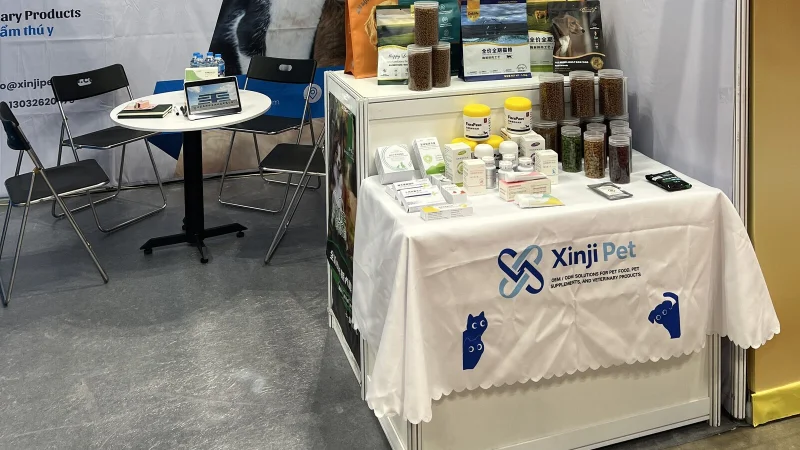
This is where Xinji Pet Food can connect naturally with the Vietnam opportunity. Xinji can support OEM/ODM pet food, pet supplements, soft chews, private label packaging, and export cooperation for buyers who want to build a product line instead of only buying a single SKU.
Online Channels Are Becoming the Real Testing Ground
The article also points to a major channel shift. It cites Ken Research data saying pet-related products on Shopee, Tiki, and Lazada have generated more than 5 million online transactions. It also states that on TikTok Shop, cat food and dog food contribute nearly 70% of pet-category GMV, with Vietnam pet-category GMV peaking at about $1.7 million in 2024.
For suppliers, this changes the meaning of OEM service. A product cannot only be “factory ready.” It also needs to be content ready. Packaging, product photos, selling points, short-video angles, Vietnamese-language explanations, and KOL testing all affect whether a product can move online.
That is why I do not separate product planning from marketing timing. In another note on foreign trade planning around global events, I argued that orders often come from earlier preparation, not last-minute trend chasing. Vietnam pet products need the same discipline: product, content, inventory, and channel timing should be planned together.
The article gives a useful case: a Guangzhou pet food brand reportedly entered Vietnam in 2025, used TikTok Shop and local pet KOL review videos, and reached top-three category performance in six months. The cited strategy was “Chinese supply chain + Vietnamese-language content + local warehousing,” with unit price around 200,000 to 350,000 VND and repeat purchase above 40%.
This is why Vietnam-facing supply pages matter. Pet Supply Vietnam gives local buyers a Vietnamese-language entry point to understand pet food supply, wholesale sourcing, OEM support, and private label options.

Functional Upgrade Is Starting, But Price Still Matters
The article cites a 2026 GPE Vietnam pet exhibition report saying Vietnam’s pet market is moving from low-price volume toward functional upgrade. Products under $10 remain mainstream, but products above $10 already account for about 30%. Demand is rising for natural pet food, grain-free food, and functional pet foods.
This does not mean every brand should rush into expensive premium positioning. In a developing market, the stronger strategy is often a balanced ladder: affordable daily food, better formula food, functional treats, soft chews, and selected supplements that solve easy-to-understand problems such as digestion, multivitamins, skin and coat, joint support, urinary care, or senior-pet wellness.
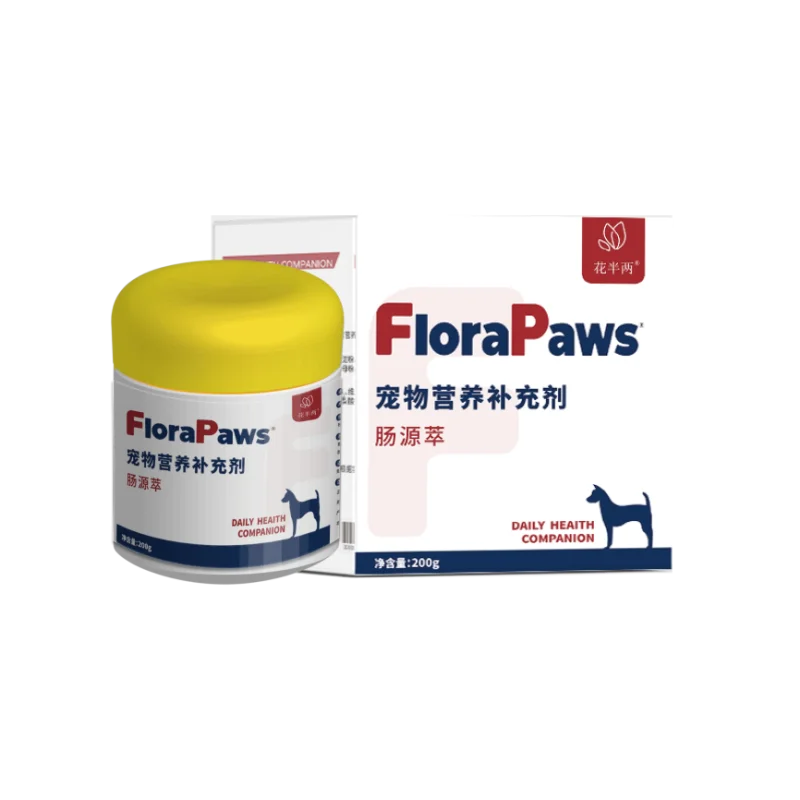
For OEM buyers, pet supplements need a different logic from pet food. Pet food relies on palatability, nutrition structure, and repeat purchase. Supplements need ingredient explanation, function positioning, dosage clarity, claim control, and consumer trust. If the supplier cannot help explain the product, the buyer will struggle to sell it online.
Petfair Vietnam 2026 Shows the B2B Side of the Opportunity
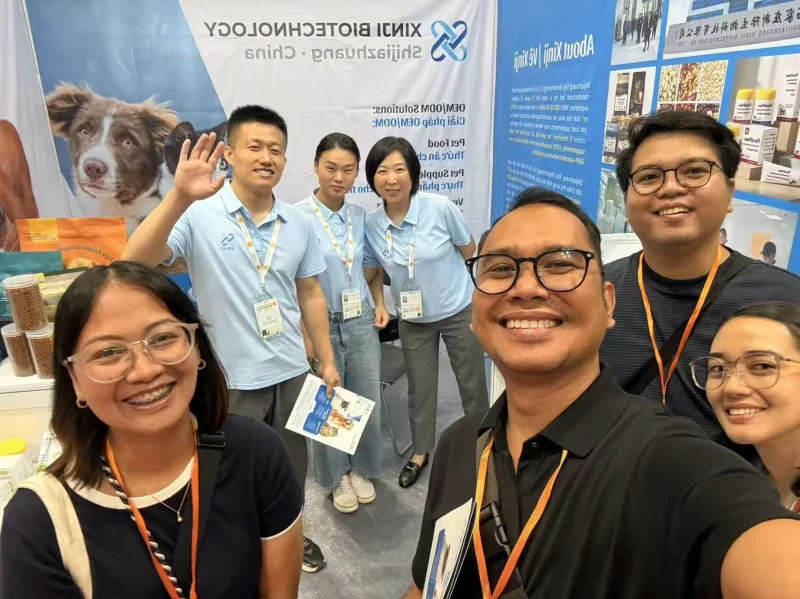
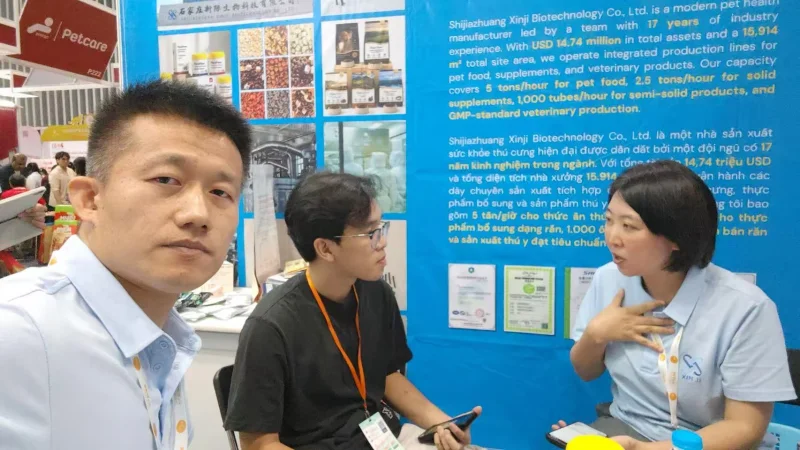
Market data is useful, but trade shows reveal the operational questions buyers actually ask. Xinji’s Petfair Vietnam 2026 coverage shows that buyer conversations are already moving into OEM/ODM details: formulas, samples, MOQ, packaging, export communication, and cooperation models.
The Xinji article Petfair Vietnam 2026 Pet Supplement OEM Opportunities in Southeast Asia explains how supplement formats and private label needs fit Southeast Asia’s pet market development.
The follow-up article Petfair Vietnam 2026 Booth Meetings shows real buyer discussions at Booth P186, including pet food, pet supplements, samples, packaging, and export support.
Three Mistakes to Avoid in Vietnam
The source article lists several risks, and I agree with the direction.
- Do not simply move China-market products into Vietnam. Taste preference, climate, storage, packaging size, and consumer education are different. The article notes that Vietnamese cats may prefer fish flavors, and dog food also needs to consider tropical storage conditions.
- Do not build only a shelf, without content. Pet products are naturally visual on TikTok. If the product has no video angle, no local-language explanation, and no influencer testing plan, the cheapest traffic channel is wasted.
- Do not ignore online channels. For young Vietnamese pet owners, the first buying channel may be TikTok Shop or Shopee rather than a supermarket shelf.
Ian Guo’s View: Build a Vietnam Product Ladder Before Chasing Scale
My conclusion is that Vietnam is not only a market for low-cost exports. It is a market where Chinese supply chains can help local buyers build better product ladders.
- For pet food: start with stable daily formulas, suitable pack sizes, fish/chicken/beef flavor logic, and repeat-purchase pricing.
- For pet supplements: choose easy-to-explain functions first, such as digestion, multivitamin, skin and coat, joint support, and urinary wellness.
- For private label: prepare packaging, Vietnamese-language selling points, sample policy, MOQ, and channel photos before pushing hard.
- For online selling: plan product content at the same time as product sourcing. In Vietnam, product video, KOL testing, and local-language pages can decide whether a product gets traction.
Vietnam’s pet market may still be early, but it is not empty. Commercial pet food penetration, online purchase behavior, and functional upgrade are all moving at the same time. For suppliers, this is a good window to enter with a clear product structure instead of waiting until the market becomes crowded.
This is the type of market note I want Pet Biz Notes to keep building: not only market excitement, but also sourcing logic, product structure, manufacturing questions, and practical export decisions.
For Vietnam-facing sourcing and private label information, buyers can start with Pet Supply Vietnam. For broader pet food, pet supplement, and OEM/ODM manufacturing support, visit Xinji Pet Food.