
Pet food packaging is often treated as a design task. In reality, it is a business decision. The right bag size, material, label structure, carton plan, and channel format can influence cost, shelf life, distributor acceptance, online conversion, storage, and repeat purchase.
Ian Guo’s view is that private label buyers should not start packaging discussions by asking for the most beautiful bag. They should start by asking a harder question: which packaging format helps this product survive production, shipping, retail, and real customer use?
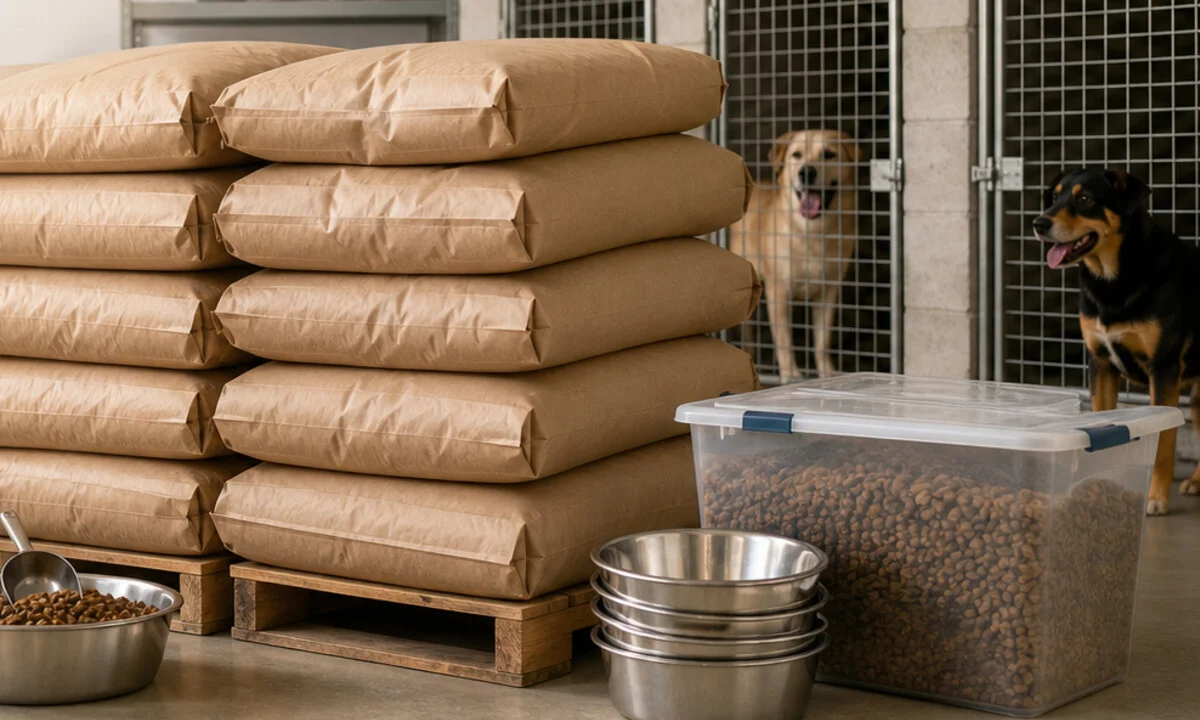
Packaging is where product strategy becomes visible
A formula is invisible until the buyer puts it into a pack. A product may be economy dog food, premium cat food, functional treats, soft chews, or a bulk shelter supply line, but the packaging tells the market how to understand it.
For a distributor, packaging needs to move through cartons, warehouses, wholesalers, and pet shops. For e-commerce, it needs to photograph well, ship safely, explain the product quickly, and reduce return risk. For shelters or wholesale buyers, plain packaging and bulk formats may be more valuable than retail decoration. For private label brands, packaging must also support repeat purchase and SKU expansion.
This is why packaging should be discussed together with category selection. In our article on how pet product buyers should choose categories without chasing every trend, the main point was that a category must fit channel, margin, supply chain, and repeat purchase. Packaging is one of the places where that fit becomes practical.
Bag size should follow the buying situation
Many new buyers ask for a package size because they saw it in another market. That can be risky. A 500g trial bag, 1kg retail bag, 2kg online pack, 5kg household pack, 10kg distributor bag, and 20kg bulk bag are not interchangeable. Each one suggests a different customer, channel, price point, and reorder behavior.
Small packs can reduce first-purchase resistance. They are useful for new formulas, new brands, cat food trials, and e-commerce bundles. Mid-size packs can work for daily household use. Large bags may support value positioning, shelters, breeders, wholesale buyers, or price-sensitive markets, but they create more pressure on shipping cost, storage, and package strength.
For private label pet food, I usually prefer a staged approach. Start with one or two sizes that match the first channel. Do not launch too many bag sizes before the product has sales data. A product line can always expand later, but excess packaging inventory can become a silent cost.
Material choice affects shelf life and trust
Pet food packaging is not only visual. It must protect the product from moisture, oxygen, aroma loss, oil migration, breakage, light exposure, and shipping damage. A beautiful bag that cannot protect kibble quality is not good packaging.
Dry pet food, treats, soft chews, nutritional paste, and supplements may need different packaging structures. Dry kibble needs barrier performance and seal strength. Soft chews may need stronger control of moisture and texture. Supplement bottles and jars need closure, fill count, label clarity, and storage guidance. Bulk bags need toughness and stacking performance.
This connects directly with factory quality control. In our guide on how to evaluate a pet food OEM factory before production, packaging was treated as part of the quality system. The reason is simple: packaging failure can make a good formula look like a bad product.
Labels must support selling without creating risk
Label content is another area where buyers need discipline. A pet food label must explain the product clearly, but it should not create unsupported claims. Ingredient statements, feeding directions, net weight, product identity, batch information, manufacturer or distributor details, and market-specific requirements should be checked before printing.
The FDA’s animal food FSMA information is a useful reminder that animal food safety is connected with manufacturing controls and documentation. For buyers entering the European market, EU Regulation (EC) No. 767/2009 is one reference point for rules around the placing on the market and use of feed. Different markets have different details, but the practical lesson is the same: packaging and label decisions should not be left until the last week before shipment.
For functional products, this becomes even more important. Claims around digestion, joints, skin and coat, urinary wellness, oral care, probiotics, or senior support should be reviewed carefully. Strong wording may help sell, but unsupported wording can create regulatory and customer-service risk.
Plain packaging can be a serious strategy
Not every buyer needs full retail packaging at the beginning. Plain packaging, bulk bags, simple labels, or local repacking can be useful in several cases: shelters, wholesale supply, market testing, distributor evaluation, low-cost channels, and brands that want to validate formula and price before investing in a full packaging system.
This does not mean plain packaging is low quality. It means the buyer is choosing efficiency. If the channel values price, volume, and reliable supply more than shelf design, plain packaging may be more practical than a premium printed bag.
For Southeast Asia, Latin America, and other growing markets, this can be especially useful. A buyer may start with bulk or simple packaging, test demand, build distributor feedback, and then move into branded retail packaging once the product line is clearer.
Carton and logistics planning should happen early
Packaging planning does not stop at the retail bag. Carton size, carton strength, pallet layout, container loading, barcode position, shipping marks, and warehouse handling can all affect the buyer’s real cost.
A product that looks profitable in unit price can lose margin if the carton cube is poor, the bag is easily damaged, the pallet is unstable, or the product is too heavy for the intended sales channel. E-commerce packs need different thinking from distributor packs. Pet shop shelf packs need different thinking from shelter supply bags.
Before confirming packaging, buyers should ask the supplier to discuss carton quantity, gross weight, carton dimensions, loading plan, storage conditions, and whether the package will survive the expected route from factory to final customer.
A practical packaging checklist for private label buyers
Before printing bags or ordering packaging materials, buyers can use this checklist.
- Channel: Is this product for pet shops, e-commerce, distributors, veterinary stores, shelters, or wholesale supply?
- Pack size: Does the size support trial, daily use, value purchase, or bulk supply?
- Material: Does the bag or container protect the product from moisture, oxygen, oil, aroma loss, and shipping damage?
- Label: Are product identity, ingredients, feeding direction, net weight, batch code, and market requirements clear?
- Claims: Are functional statements realistic and supported?
- Carton: Does the carton plan work for warehouse, pallet, and container loading?
- Inventory: Is the first packaging order small enough to avoid being trapped by untested design or wrong size decisions?
Where Xinji can support packaging decisions
Xinji Pet Food’s OEM and private label service includes packaging discussion because packaging is part of the product route, not a separate decoration step. For buyers developing dog food, cat food, treats, soft chews, nutritional paste, or supplement lines, the packaging decision should connect with formula, MOQ, channel, price level, and export plan.
This is also part of the broader supplier shift described in our article on Chinese pet food factories moving beyond OEM. A factory that understands packaging, cartons, product positioning, and launch sequence can help buyers avoid mistakes before production starts.
Ian Guo’s conclusion
Packaging is not the final step of a pet food project. It is one of the earliest strategic decisions. It affects cost, shelf life, shipping, customer trust, channel fit, repeat purchase, and regulatory risk.
For private label buyers, the right packaging question is not “Which bag looks best?” The better question is “Which packaging format makes this product easier to sell, easier to ship, easier to store, and safer to reorder?”
When packaging is planned this way, it becomes more than design. It becomes part of the buyer’s business model.