
Most pet product companies spend their time looking at food, treats, toys, litter, grooming, supplements, and smart devices. These are the visible categories, so they naturally attract most of the competition.
But the pet business also has quieter categories that sit behind the main market. Pet memorial products are one of them.
A recent Chinese industry article profiled My Furever Memories, a U.S. brand built around personalized pet memorial stones and keepsakes. The reported revenue number attracted attention, but I think the more important lesson is not the exact sales figure. The real lesson is how a small, emotional, highly specific product category can become a serious business when the product, content, customization workflow, and customer emotion are aligned.
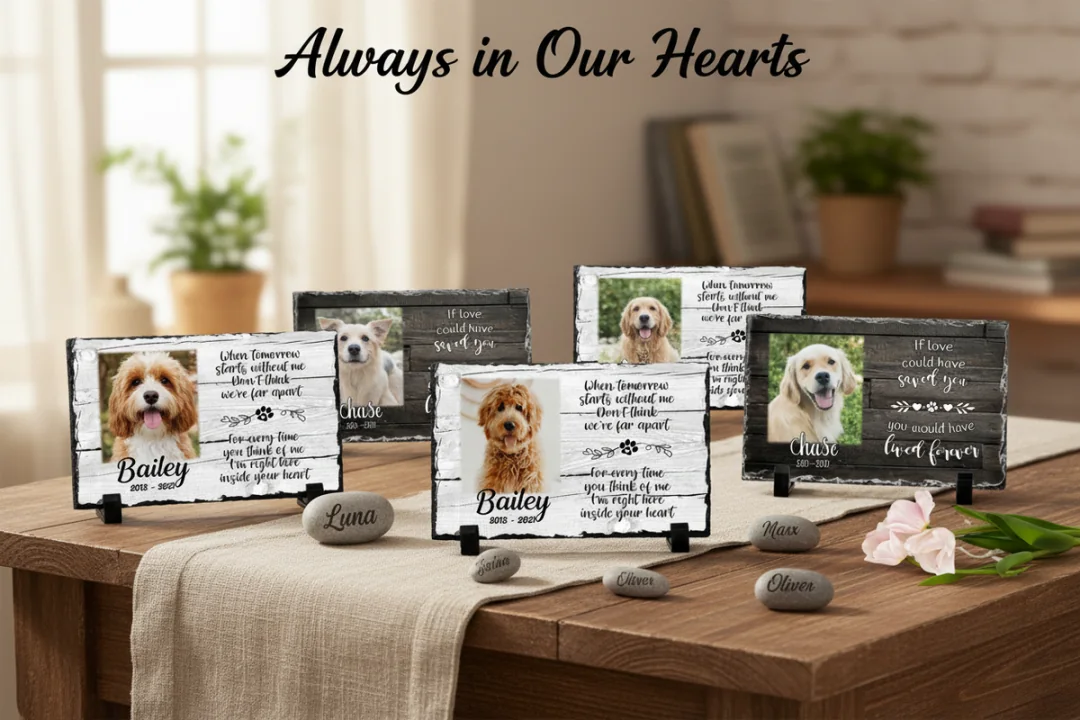
This is not a stone business. It is an emotional-resolution business.
At first glance, a pet memorial stone looks like a simple product: stone material, photo, name, date, and a short message. From a factory point of view, it may look like engraving, printing, cutting, polishing, packaging, and fulfillment.
But that is not how the buyer sees it. The buyer is not only buying a piece of material. The buyer is trying to hold on to a relationship.
This is why the category can support higher prices than many ordinary pet accessories. The product is connected to grief, memory, identity, and family. When a pet owner is choosing a memorial item, the decision is not mainly about whether the stone costs a few dollars more or less. The decision is whether the product feels respectful enough for the pet they lost.
In my view, this is the first lesson for pet entrepreneurs: emotional value is not decoration. In some categories, emotional value is the product.
Why this niche can work
Pet memorial products sit at the intersection of several strong trends.
First, pet humanization is real. Many owners do not treat pets as replaceable animals. They treat them as family members. Pew Research Center has reported that about half of U.S. pet owners say their pets are as much a part of their family as a human member. That emotional position changes what people are willing to buy.
Second, pet aftercare is becoming more organized. Cremation, urns, memorial jewelry, paw-print keepsakes, stones, frames, and personalized home items are no longer only local service products. Some of them can be sold online as customized e-commerce products.
Third, the category has a clear search behavior. A customer may search for “pet memorial stone,” “dog memorial gift,” “cat memorial plaque,” “pet loss gift,” or “personalized pet grave marker” at exactly the moment they need the product. That makes SEO and content especially important.
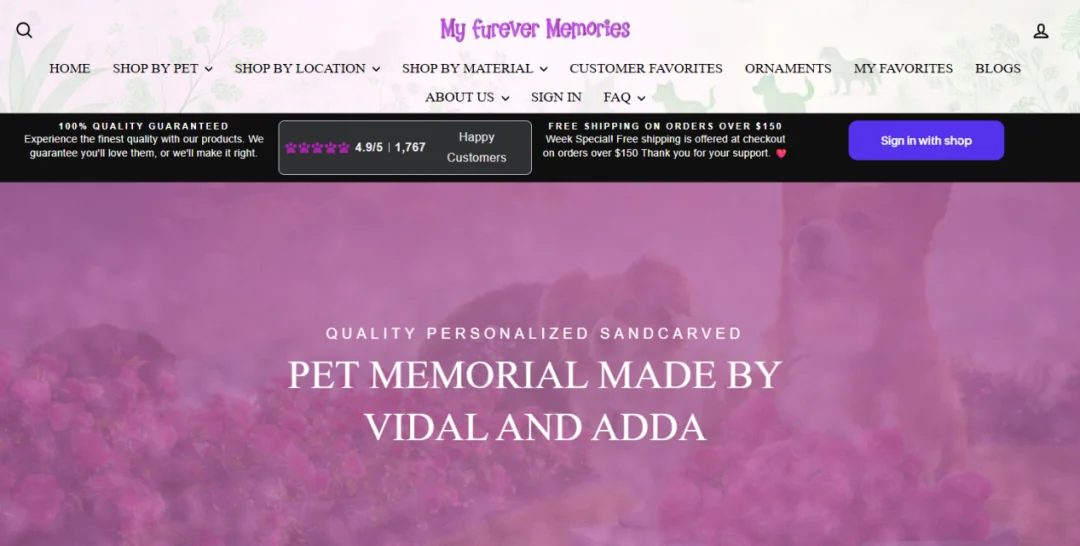
The website is part of the product
For this kind of category, the website cannot be treated as a simple catalog. The website itself is part of the emotional experience.
A normal product page might focus on size, material, price, and shipping. A memorial product page still needs those details, but it also needs softer elements: examples, wording choices, message templates, customer stories, reviews, photos, and reassurance.
The customer may be sad, uncertain, and careful. The site has to reduce friction without becoming aggressive. That is a difficult balance. If the page pushes too hard, it feels insensitive. If the page is too unclear, the customer loses trust.
From an e-commerce perspective, this means the product page should answer several emotional and practical questions:
- Will the photo look good on the final material?
- Can I choose words that feel personal, not generic?
- Will the product arrive safely?
- Will the company handle the order with care?
- Can I see examples from other pet owners?
- What happens if the engraving or photo result is not right?
These questions are not only UX questions. They are conversion questions.
Customization is the operational core
Personalized memorial products look simple from the outside, but the operation behind them is not simple. Each order may include a pet photo, pet name, dates, message template, material selection, shape, size, proofing, and customer approval.
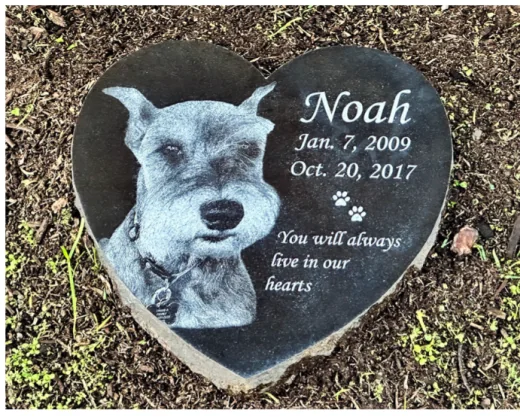
For manufacturers, this is the real difficulty. The product is not only about whether the factory can engrave stone. It is about whether the factory can control a customized workflow without errors.
In a normal pet accessory order, a small defect may lead to a return. In a memorial product order, a spelling mistake, wrong date, poor photo rendering, chipped corner, or late delivery can feel much more serious because the emotional context is sensitive.
This gives good factories a chance to build a stronger position. A supplier that can manage proofing, photo processing, engraving consistency, protective packaging, and small-batch fulfillment can become more valuable than a supplier that only offers a low unit price.
Content can replace part of paid advertising
One reason this category is interesting is that content can be very powerful. Pet memorial products naturally create stories. Customers may share a photo of the pet, a memory, a short review, or a message about what the product meant to them.
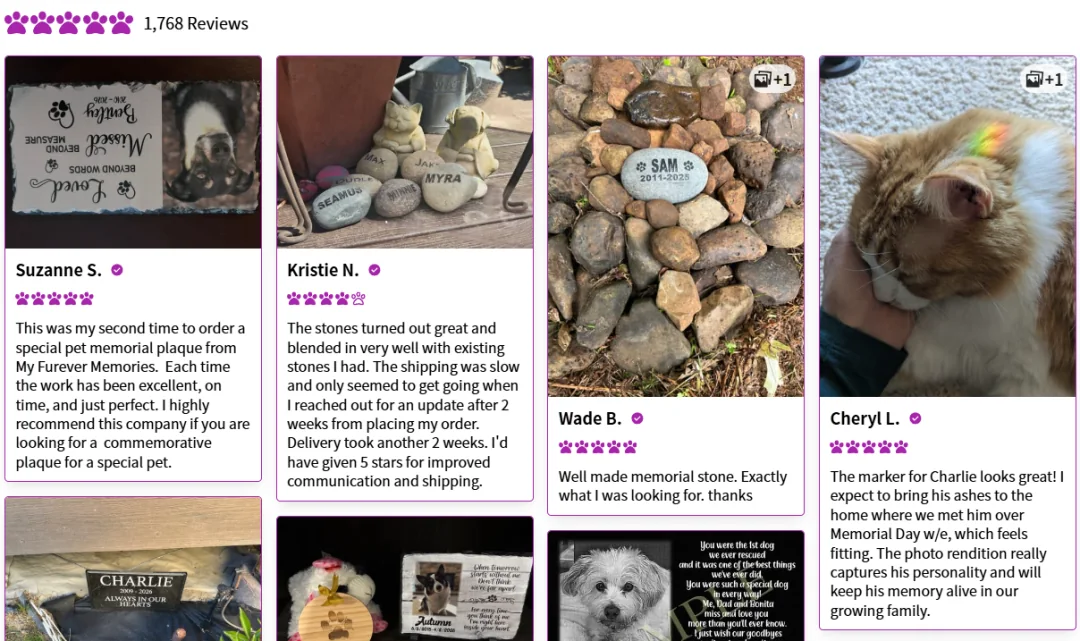
That kind of content is different from ordinary product reviews. It is not only “good quality” or “fast shipping.” It can explain the use case, the emotion, and the trust decision better than a brand can explain it itself.
For independent pet brands, this is important. Paid ads are expensive and unstable. Emotional categories can build long-term search traffic and social trust if the site collects and organizes real customer stories carefully.
However, the brand must handle this content with respect. Pet loss is not a cheap marketing angle. If a company uses grief only as a conversion trick, customers will feel it. The tone has to be careful, honest, and human.
What pet product companies can learn
I see five lessons from this case for pet product brands, factories, and cross-border sellers.
First, look behind the main category. Pet food, toys, litter, and smart products are crowded. The less obvious categories can still have strong demand if they solve a real emotional or practical problem.
Second, do not confuse niche with small. A product can be narrow and still become meaningful if the buyer motivation is strong, the product is personalized, and the brand owns the search intent.
Third, build a workflow, not only a product. Customization, proofing, production control, packaging, and after-sales communication are part of the offer. In memorial products, the workflow is part of the value.
Fourth, make content useful, not decorative. Product examples, message templates, buying guides, care instructions, and customer stories can all help the buyer make a careful decision.
Fifth, protect the tone of the brand. The company should not sound like it is exploiting sadness. The best positioning is service, memory, and dignity.
My view: this category shows where pet business is going
My view is that pet memorial products are not only a small “aftercare” category. They are a signal of a broader change in the pet industry.
The pet market is becoming more emotional, more personalized, and more segmented. Many future opportunities will not come from making another generic product. They will come from understanding a specific moment in the pet owner’s life and building a product system around that moment.
That moment could be adoption, training, illness, aging, travel, surgery recovery, senior care, or loss. Each moment creates different needs, different language, different content, and different product standards.
For Chinese and Asian manufacturers, this is especially important. Competing only on cost will become harder. The better opportunity is to understand these emotional and use-case-based categories, then support brands with more complete solutions: materials, customization options, packaging, photo-processing workflow, small-batch flexibility, and reliable delivery.
The strongest pet businesses of the next stage may not be the ones with the widest product catalog. They may be the ones that understand one pet-owner need deeply and serve it with discipline.
Pet memorial products are a quiet example of that idea.