
Interzoo is one of the most important meeting points for the global pet industry. The official Interzoo website describes the 2026 edition in Nuremberg as running from May 12 to May 15 and presenting products across pet food, pet care, accessories, packaging, shop fittings, and other pet-industry segments.
That is why a recent Douyin post attracted so much attention among Chinese exhibitors and exporters.
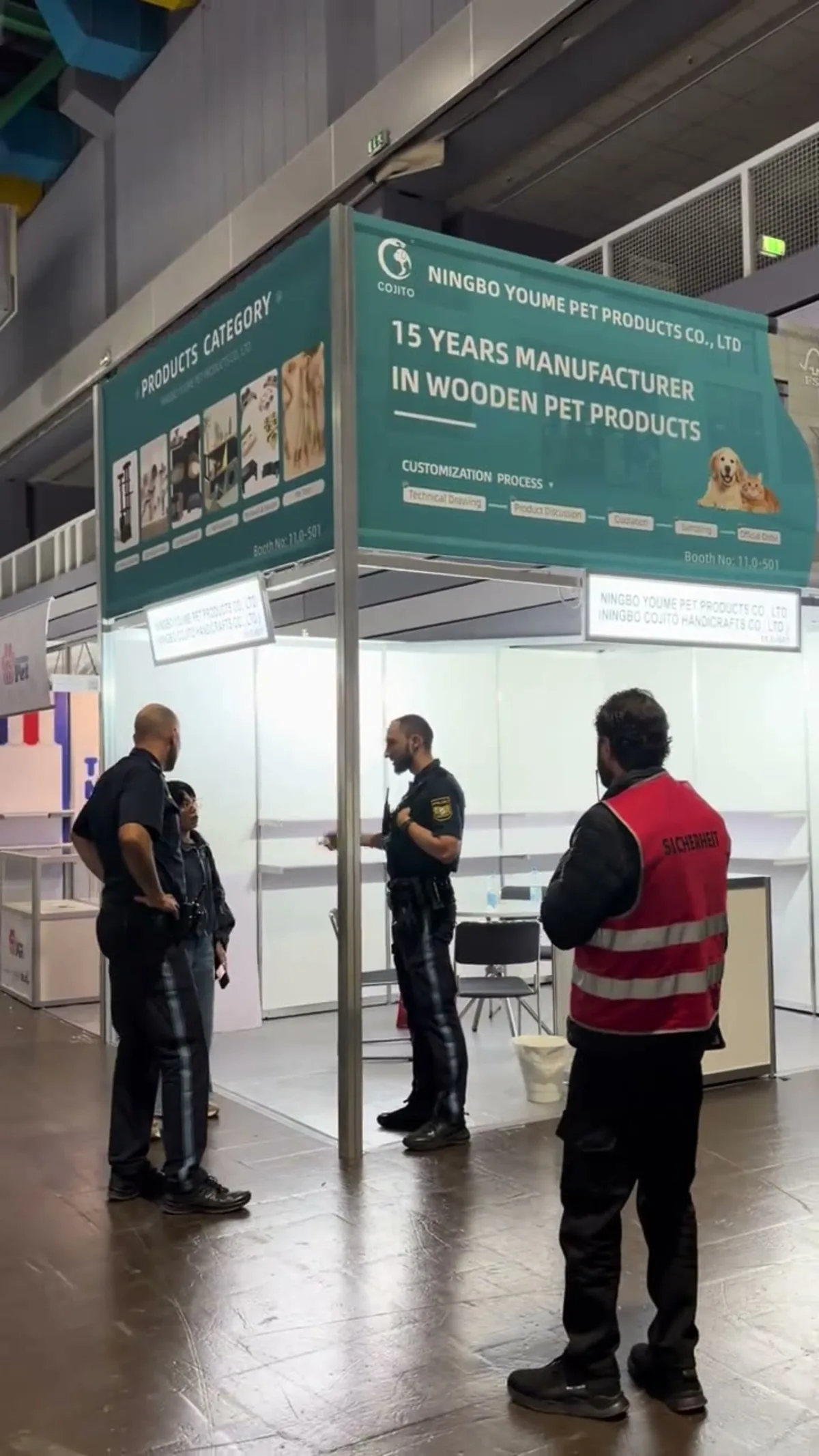
On May 12, a creator posting under the name `@阿糕咯` said that products at an Interzoo booth had been stolen and warned other Chinese exhibitors to stay alert. The public video showed the booth area and security or police personnel nearby. A follow-up video on May 13 said a police-report follow-up had arrived and thanked commenters for suggestions. The follow-up also pointed to a practical issue many overseas exhibitors understand quickly: when something goes wrong, language barriers and unclear responsibility between venue staff, logistics workers, neighboring booths, and police can slow down the response.
Pet Biz Notes cannot independently verify the full circumstances from the public videos alone. But for pet product exporters, the incident is still worth studying. The lesson is not simply “be careful in Europe.” The better lesson is this: exhibition security is part of export operations.
Why This Matters to Pet Product Manufacturers
Pet product manufacturers do not attend a major trade fair only to put products on shelves. They bring months of product planning, customer research, packaging decisions, and private-label ideas into a temporary booth.
A cat tree sample can show structure, fabric choice, packaging volume, hardware quality, and assembly logic. A cat litter sample may show clumping performance, dust level, scent direction, granule size, and packaging positioning. A pet food or treat sample may represent formulation direction, texture, palatability, flavor strategy, compliance thinking, and private-label potential. A toy, grooming tool, feeder, bed, or leash may reveal mold decisions, material choice, color strategy, and retail shelf thinking.
For an OEM or ODM exhibitor, the booth is not only a display area. It is a temporary showroom, negotiation room, sample warehouse, and customer-data point. Losing samples during setup or after closing can damage more than one day of display. It can also weaken buyer meetings, reduce confidence, create extra logistics cost, and expose product ideas before the supplier has secured serious buyers.
That is why a booth-theft claim should not be treated as entertainment or social-media drama. It is a practical business case.
Where the Risk Usually Appears
Trade fair risk does not only happen during opening hours. For many exporters, the highest-risk moments are the less controlled periods:
- Goods arriving at the hall before the team is fully present.
- Booth builders, logistics workers, venue workers, neighboring exhibitors, and visitors moving around at the same time.
- Samples placed on open shelves before the booth has a responsible person.
- The evening closing period, when the team is tired and assumes the hall is controlled.
- Small, portable, high-value samples left near aisles, counters, or unlocked storage.
- Price sheets, buyer information, private-label packaging, prototypes, laptops, and mobile devices left inside the booth.
For pet manufacturers, this risk is more serious because many products are easy to carry. Accessories, treats, toys, grooming tools, packaging mockups, formula samples, and small cat-product prototypes can disappear quickly. Even larger products such as cat trees or pet furniture may include detachable parts, material boards, hardware kits, catalogs, or packaging samples that are easy to remove.
The First Layer: Sample Inventory
The first step is a sample inventory list. Each product should have a photo, product name, quantity, package count, and person responsible. If possible, use QR labels or numbered stickers so the team can quickly compare what arrived, what is displayed, and what is stored.
This should be prepared before shipping, not after arrival. A good inventory file should include:
- Product name and internal SKU.
- Quantity shipped.
- Quantity planned for display.
- Quantity kept as backup.
- Packaging count and carton number.
- Photo of each sample or carton.
- Booth location where it should be placed.
- Person responsible for checking it.
- Whether the sample is public, buyer-only, prototype, or confidential.
This is not bureaucracy. If there is a logistics dispute, theft, damage, or missing sample, the team needs evidence immediately.
The Second Layer: Separate Display, Backup, and Private Samples
Do not put every important product on the booth during setup. Lightweight, high-value, easy-to-carry items should be stored until the booth is staffed and the show is open.
For pet manufacturers, I would divide samples into three groups:
- Public display samples: products that can stay on open shelves.
- Controlled samples: products shown only when a staff member is present.
- Private samples: prototypes, private-label ideas, new material tests, formula samples, or buyer-specific packaging that should not be left unattended.
Many factories make the same mistake: they treat all samples as “booth decoration.” That is too loose. A booth should be operated like a small showroom with stock control.
The Third Layer: Delivery Proof and Daily Photos
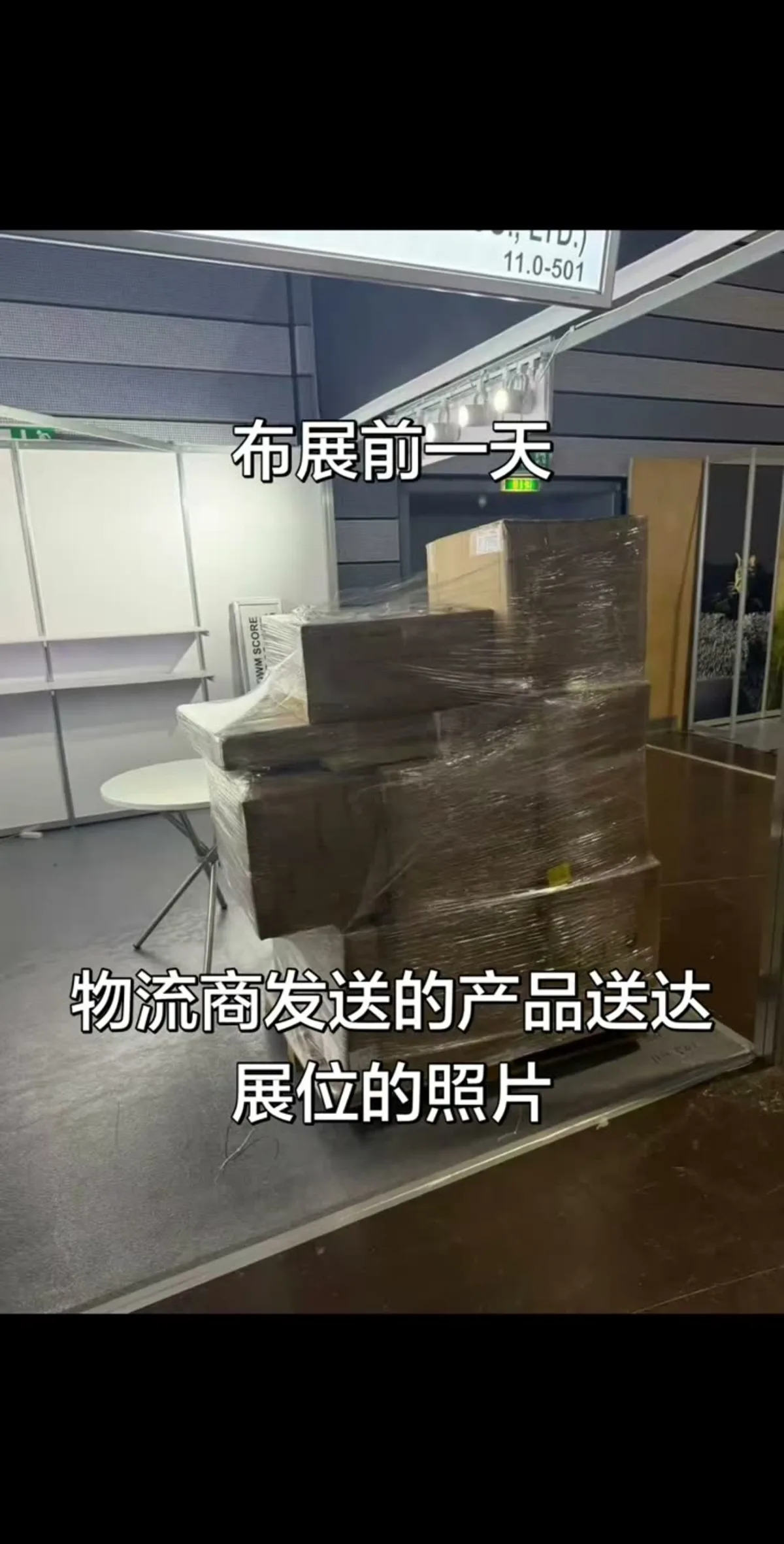
The third step is to photograph the booth at key moments: when logistics delivers, after booth setup, before leaving each evening, and before reopening each morning. These photos are useful for internal control, insurance claims, venue reports, and logistics disputes.
At minimum, the team should keep these photos:
- Cartons or pallets when they arrive at the booth.
- Shipping labels and delivery documents.
- Booth shelves after setup.
- Locked storage area before leaving.
- Important samples before opening each morning.
- Any missing or damaged item as soon as it is noticed.
The May 13 follow-up video included a frame saying the logistics provider had sent a photo of products delivered to the booth. That kind of evidence matters. But one photo from the logistics side is not enough. The exhibitor also needs its own handover and booth-status records.
The Fourth Layer: Language and Incident Plan
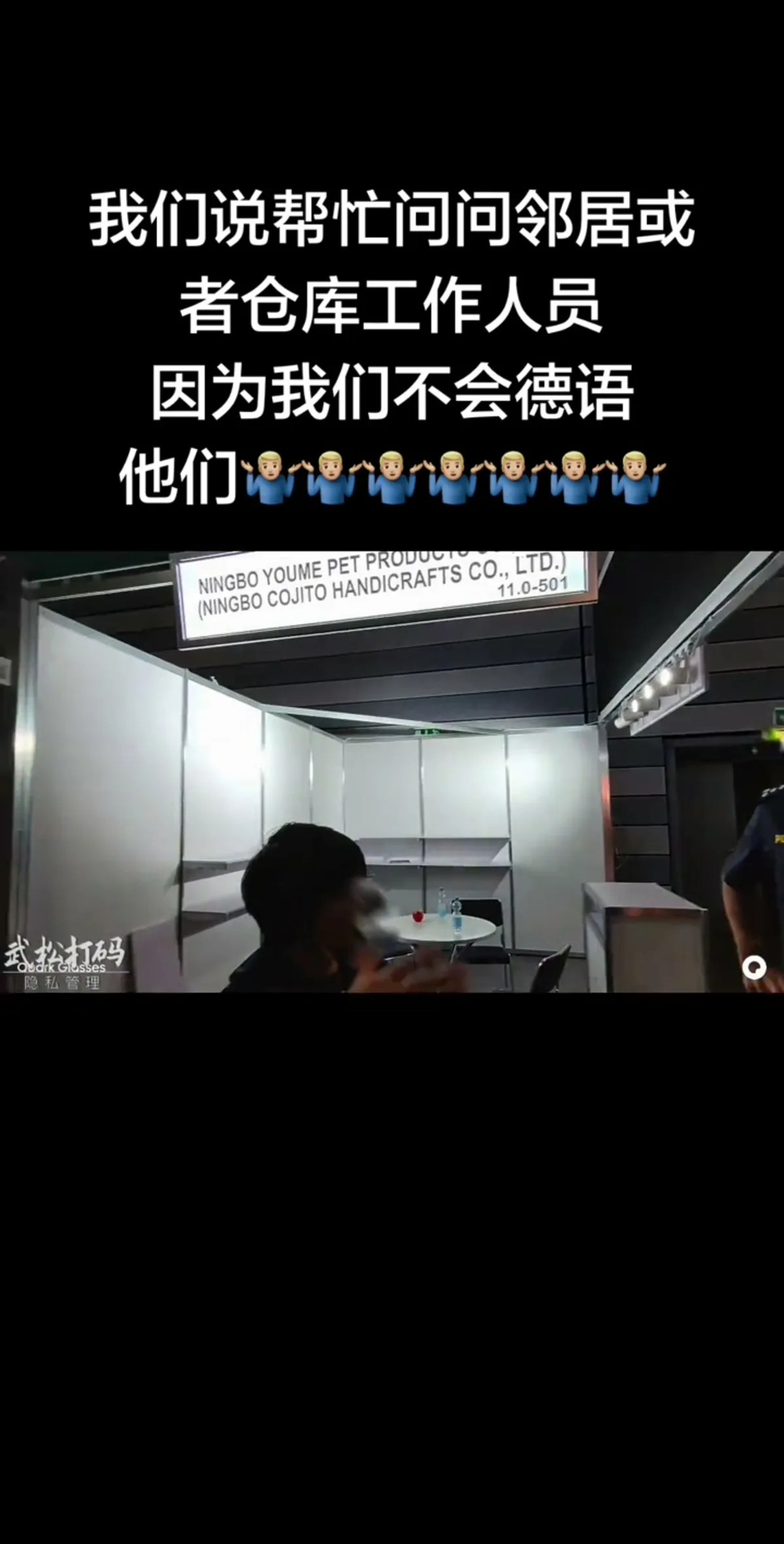
The fourth step is to prepare a simple incident card in English and the local language. At a German show, that means at least English and German. The card should include booth number, company name, local contact, missing item list, delivery photos, and the logistics provider contact. When the team is stressed, this avoids wasting time translating basic facts.
The follow-up video mentioned difficulty asking neighboring booths or warehouse workers because the exhibitor did not speak German. This is common. It is also avoidable.
A factory does not need every salesperson to speak German. But it should prepare a one-page incident template:
- “We are exhibitor [company name] at booth [number].”
- “The following samples are missing.”
- “The items were delivered at [time] according to [logistics proof].”
- “Here are photos of the products and cartons.”
- “Please help us contact venue security, organizer staff, and police.”
- “Please write down the report number and contact person.”
This template should be ready before the show starts.
Closing Routine Matters
Many exhibitors focus on booth design, buyer invitations, and product brochures. Those are important, but the closing routine is just as important.
Before leaving the hall, someone should confirm:
- Which samples stay on open shelves.
- Which samples go into locked storage.
- Who keeps the keys.
- Whether price sheets, buyer cards, notebooks, laptops, and prototypes have been removed.
- Whether a final booth photo has been taken.
This sounds basic, but trade fairs are busy, teams are tired, and setup days are chaotic. Most mistakes happen in those loose moments.
If Something Goes Wrong: Do Not Freeze
The public comments under the Douyin videos were emotional, and many were sarcastic. But one practical suggestion stood out: if a theft has already happened, make the booth message visible instead of staying silent.
For example, some commenters suggested a bilingual notice explaining that the products had been stolen and inviting buyers to view photos, videos, and ordering information. That may not replace the lost samples, but it can preserve traffic and turn confusion into a clear story.
From an exhibitor’s point of view, this is not just clever marketing. It is damage control. Buyers who arrive at an empty booth need an explanation. A clear sign, a tablet with product videos, printed catalogs, and a calm staff explanation can help protect the show’s remaining value.
In a real incident, the team should move in two directions at the same time:
- Evidence route: report to venue security, organizer, police, logistics provider, and insurance contact.
- Business route: keep the booth usable for buyers through photos, videos, catalogs, QR pages, and clear explanation.
The worst response is to spend the whole day arguing internally while buyers walk past an empty booth.
What the Comment Section Revealed
The public comments under the videos were emotional. Some were angry, some sarcastic, and some turned the incident into a broader discussion about overseas safety. Not all of that is useful for a professional industry article.
But several comments had practical value:
- Some suggested using the incident as a visible booth message, written in English and German.
- Some focused on the logistics and setup chain, asking who had access after delivery.
- One commenter with claimed Germany exhibition experience said portable, valuable samples should not be placed out during setup and should only be displayed during opening hours.
- Several comments showed that many Chinese exhibitors still assume trade-fair halls are safer and more controlled than they may actually be.
That last point is important. The issue is not whether one country is good or bad. The issue is operational maturity. When a Chinese factory goes overseas, it cannot use the same assumptions it uses at a domestic show.
Ian Guo’s View
My view is simple: pet exporters should treat exhibition security the same way they treat product quality or shipping documents. It is not glamorous, but it protects the business.
For Chinese pet product manufacturers going overseas, especially OEM and ODM suppliers, the exhibition booth often carries months of product planning and customer-development cost. A sample may cost little to produce, but it may represent a season’s new idea, a customer’s private-label direction, or the only physical proof a buyer can inspect during the show.
Interzoo remains a key platform for the pet industry. The point is not to avoid major exhibitions. The point is to build a more professional operating system around them.
For the next show, pet exhibitors should not only ask, “How do we attract buyers?”
They should also ask:
- What could disappear?
- Who is responsible for each sample?
- What evidence do we have if something goes wrong?
- How do we communicate quickly in the local language?
- How do we keep the booth useful even if samples are delayed, damaged, or lost?
That is the difference between simply attending a trade fair and operating like an international supplier.
Practical Checklist for Pet Product Manufacturers
Before Shipping
- Build a photo-based sample inventory before shipping.
- Mark every carton and key sample with an internal number.
- Separate public samples, controlled samples, and private/prototype samples.
- Prepare product photos, short videos, catalogs, QR pages, and backup presentation materials.
- Confirm whether trade-fair insurance, cargo insurance, or exhibitor insurance covers theft, damage, and missing samples.
- Prepare English and local-language incident templates.
During Setup
- Keep logistics delivery photos and signed handover proof.
- Take photos when goods arrive at the booth.
- Do not display all small or valuable samples during setup.
- Keep prototypes and private-label samples in locked storage or with a responsible staff member.
- Confirm who is allowed to enter the booth area during setup.
During Show Hours
- Keep one person responsible for each important product group.
- Avoid leaving prototypes, price sheets, buyer information, laptops, formula notes, and packaging artwork unattended.
- Use QR codes and digital catalogs so buyers can still see products if physical samples are limited.
- Record serious buyer meetings and requested samples in a simple daily log.
Before Leaving Each Day
- Use lockable storage for small, high-value, or easy-to-carry samples.
- Take booth photos before leaving every day.
- Remove laptops, buyer cards, notebooks, price lists, and confidential materials.
- Assign one person to check shelves, storage, keys, and final booth photos.
If Products Are Missing
- Do not move remaining evidence before taking photos.
- Compare missing items against the sample inventory.
- Contact venue security and the organizer immediately.
- Ask for a written report number or contact record.
- Notify logistics provider and insurance contact.
- Keep the booth working with product photos, videos, catalogs, and a clear bilingual explanation.
Exhibition security will never be the most exciting part of the pet business. But when it fails, everything else becomes harder.